

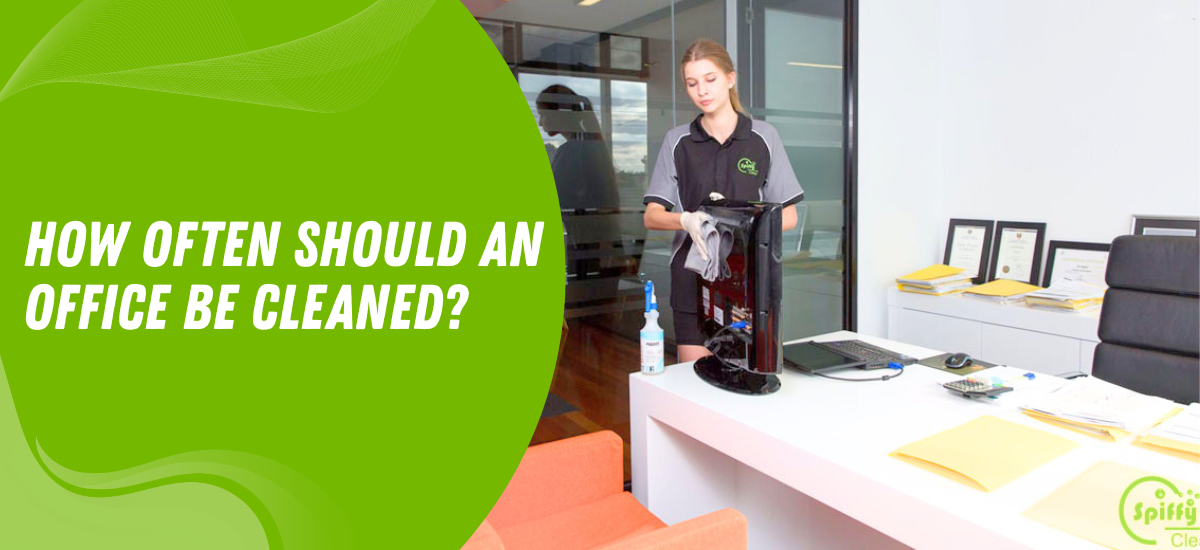
Most offices need professional cleaning two to three times per week at a minimum. But that number shifts quickly depending on how many people use the space, whether clients visit regularly and what industry the business operates in. A small back-office team of ten has very different cleaning demands to a busy CBD floor that sees client foot traffic every day. Getting the frequency wrong in either direction creates problems: too little and hygiene suffers; too much and you are paying for cleans a space does not need.
Table of Contents
ToggleJack Sidhu, director of commercial cleaning services in Melbourne, says: “Cleaning frequency is one of the first things we get asked, and the honest answer is always the same: it depends on how hard the space is actually used, not how big it is.”
What Factors Determine How Often an Office Needs Cleaning?
Four things consistently drive cleaning frequency decisions for Melbourne offices:
- Staff size: more people means faster accumulation of kitchen mess, bathroom use and general waste. A team of 40 cannot run on the same schedule as a team of 8.
- Daily foot traffic: offices with regular client visits, deliveries or shared meeting room bookings wear faster than closed, staff-only environments.
- Industry type: client-facing businesses in finance, legal or sales need to maintain a higher standard of presentation at all times. Back-office operations have more tolerance for a mid-week clean.
- Layout: open-plan floors with shared kitchens, high-traffic corridors and multiple bathrooms need more attention than smaller partitioned offices with limited shared zones.
Shared buildings add another layer. Common areas like lobbies, lifts and shared bathrooms fall outside individual tenancies, which is where body corporate cleaning in Melbourne becomes a separate scheduling consideration.
How Often Do Different Office Types Need Cleaning?
Real-world cleaning frequency tends to follow these patterns across office types:
Office Type | Recommended Frequency | Key Areas |
Small office (under 20 staff) | 2–3 times per week | Bathrooms, kitchen, bins |
Mid-size office (20–50 staff) | 3–5 times per week | All above + meeting rooms, floors |
Large CBD office / client-facing | Daily | Full premises including reception |
Medical or healthcare office | Daily + multiple touchpoint cleans | All surfaces, compliance-driven |
Shared / multi-tenant building | Daily (common areas) | Lifts, lobbies, shared bathrooms |
Seasonal factors also apply. Flu season and year-end busy periods often justify a temporary increase in frequency even for offices that normally run on a lighter schedule. Businesses planning can use a workplace cleaning schedule guide to map this out before locking in a contract.
Why Choose Spiffy Clean?
Jack Sidhu leads a triple-certified, ISO-accredited team that has been cleaning Melbourne offices for years. Spiffy Clean uses directly employed, police-checked staff with full public liability cover. No subcontracting, no generic schedules. Every cleaning plan is built after an onsite assessment of how the space is actually used.
The team gets held to the same standard on the tenth clean as the first.
Not sure if your current cleaning frequency matches your actual foot traffic?
FAQ
Most small offices with under 20 staff manage well on two to three professional cleans per week. This covers bathrooms, kitchen surfaces, floors and bins. Higher foot traffic or regular client visits may push this to daily service.
Yes. Flu season, allergy season and high-activity periods like end of financial year often justify a temporary increase. Many businesses add a short-term daily schedule during winter months and return to their standard rotation once the risk period passes.
Bacteria and allergens accumulate on shared surfaces, which increases staff sick days and affects air quality. It also creates a poor impression for visiting clients and accelerates wear on flooring and upholstery, adding to long-term replacement costs.
The right frequency depends on staff size, daily foot traffic, industry type and layout. An onsite assessment is the most accurate way to set a schedule. A good provider assesses the space before recommending a plan rather than applying a generic default.