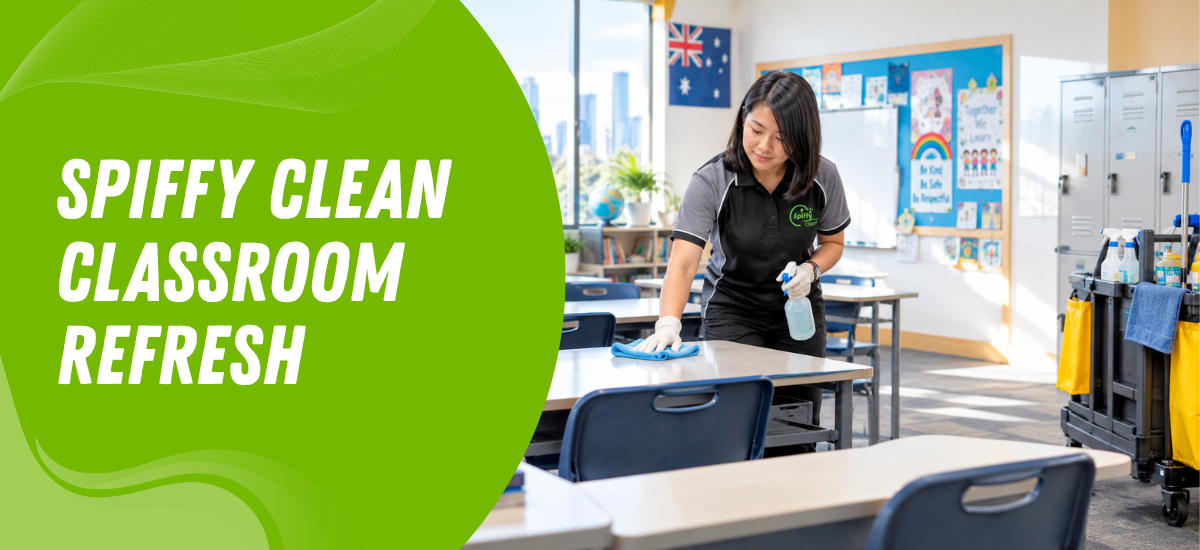
School cleaning in Melbourne requires a documented, frequency-matched programme covering high-touch surfaces, bathrooms, classrooms, and outdoor areas. Victorian Department of Education guidelines set the baseline, but controlling illness transmission goes well beyond a daily mop and vacuum. Shared desks, door handles, and canteen surfaces need multiple service rounds daily. A reactive approach in a high-traffic school environment isn’t a strategy. It’s a liability.
Table of Contents
ToggleAccording to Spiffy Commercial Cleaning, expert school cleaning services in Melbourne are “built around shift-matched schedules and compliance documentation that schools can present during audits not just a checklist someone fills in at the end of the night.”
How Often Should Melbourne Schools Be Professionally Cleaned?
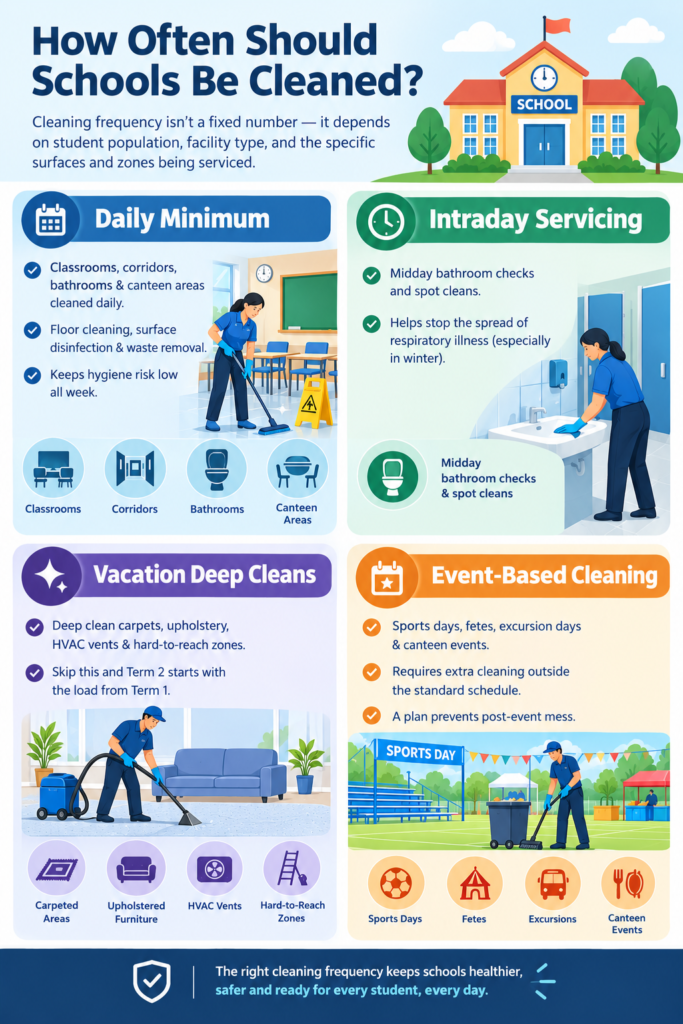
Getting frequency right isn’t about spending more schools that work with expert school cleaning services in Melbourne know it’s about matching the cleaning schedule to what the facility actually generates in terms of traffic and contamination load.
What Should Melbourne Schools Actually Demand From a Cleaning Contractor?
Most school cleaning contracts are underspecified they describe inputs like hours and visits rather than outputs like compliance outcomes and documented hygiene standards.
- Written Scope: Every zone, surface type, cleaning method, and task frequency needs to be named in writing a verbal agreement or generic proposal has no teeth when standards slip three weeks into a contract.
- Compliance Docs: WWCC certificates, public liability insurance, and a Safe Work Method Statement should be producible on request school principals carry duty of care obligations that extend directly to every contractor on their grounds.
- Product Transparency: Schools can and should ask for Safety Data Sheets on every product used on student-contact surfaces contractors who won’t hand these over aren’t worth renewing.
- Review Clauses: Monthly walkthroughs, inspection checklists, or a formal escalation process built into the contract give schools actual leverage when cleaning quality drops without one, there’s nothing to enforce.
So the difference between a school that stays compliant and one that doesn’t usually comes down to how specifically the contract was written in the first place and that’s exactly what separates quality commercial cleaning from basic cleaning.
Why Choose Spiffy Clean?
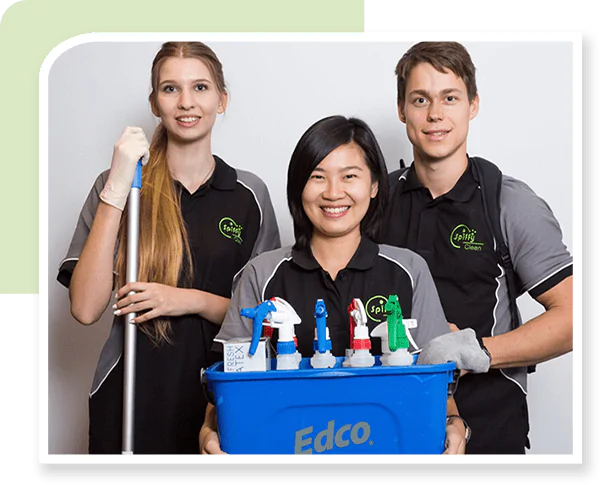
Jack Sidhu, director at Spiffy Clean delivers school cleaning programmes across Melbourne that are built around Victorian compliance requirements, documented service records, and cleaning schedules matched to actual student traffic not generic contracts copied from an office cleaning proposal. About Spiffy Commercial Cleaning the team holds full public liability insurance, WWCC-cleared staff, and experience across primary schools, secondary colleges, and childcare facilities throughout Melbourne.
Schools that move to a structured cleaning programme with Spiffy report fewer illness outbreaks during term, cleaner audit results, and a level of documentation that actually holds up when the department asks questions.
Is your school’s current cleaning programme actually meeting Victorian compliance standards?
FAQ
Daily cleaning is the minimum; high-traffic schools benefit from intraday bathroom checks and term break deep cleans.
WWCC clearance for all staff, public liability insurance, and a current Safe Work Method Statement are non-negotiable.
Yes schools require child-safe products, WWCC-cleared staff, and zone-specific protocols that office cleaning doesn’t address.
A written scope of works, product list, frequency schedule, and a performance review clause are the baseline contract requirements.